Supporting generations through Viet Nam’s recycling sector: Nguyễn Thị Nhạn’s journey
-

-
The Circulate Initiative
-
October 20, 2026
-
10 min read
The Circulate Initiative
October 20, 2026
10 min read
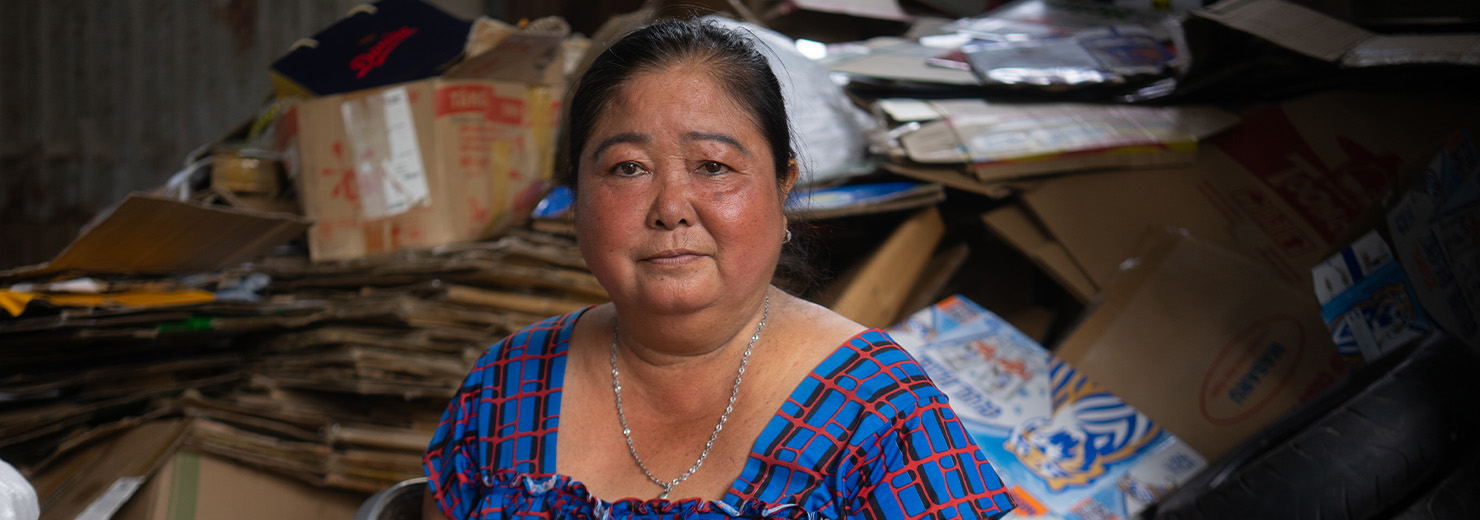
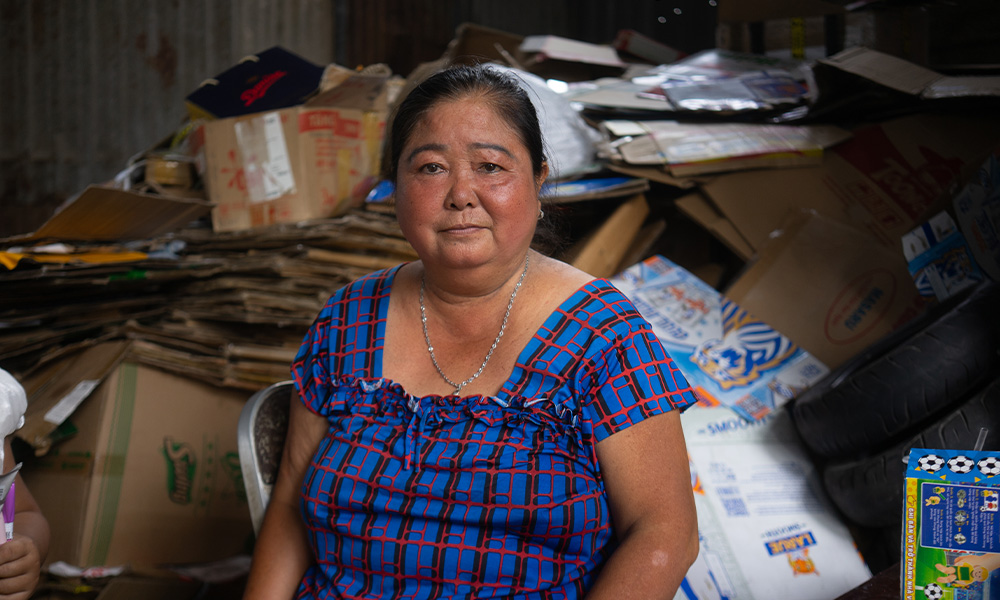
This story of Nguyễn Thị Nhạn, an informal waste sector worker from Viet Nam, is the second entry in the blog series, From Challenges to Aspirations: Stories from Waste Workers.
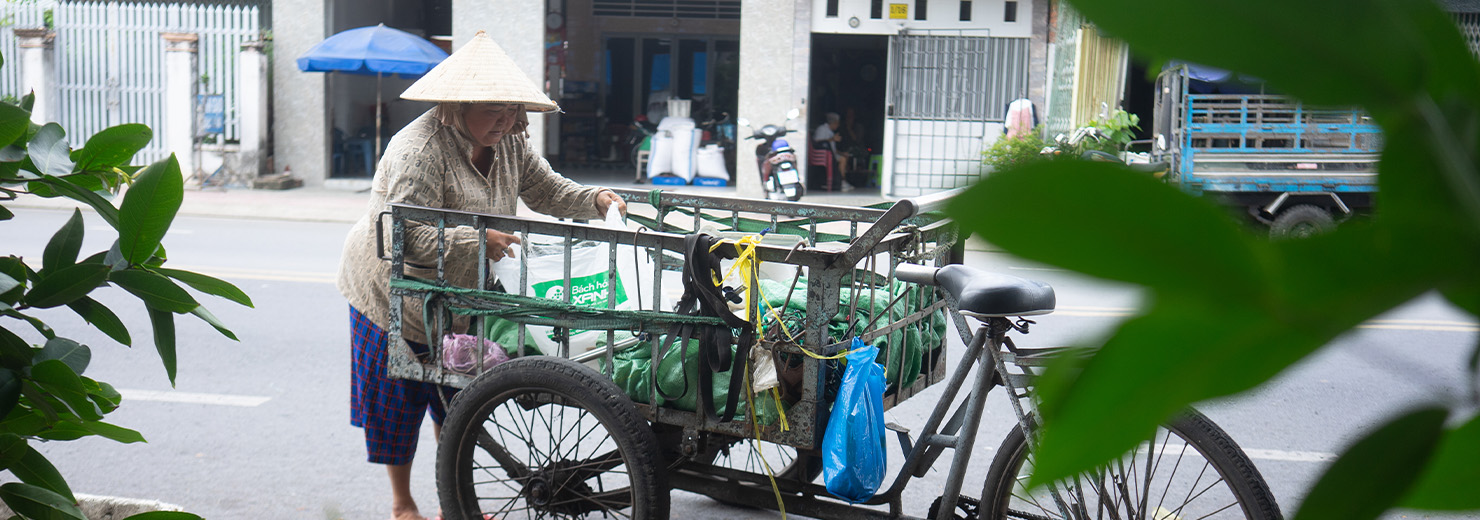
At around seven each morning, after feeding her two grandchildren, Nhạn begins moving through the streets of Mỹ Tho City. Pushing her cart along familiar routes, she calls out to households as she passes, buying copper, iron, paper, plastic, and other materials that she can sort and sell.
To earn a living buying and selling recyclables, Nhạn must keep track of changing material prices, travel between households to collect recyclable materials, and maintain relationships with regular customers. Over more than 20 years, she has built a network of households that call when they have materials available or set them aside until she returns.
In Viet Nam, an estimated 400,000 to 800,000 informal waste sector workers1 – the majority of whom are women2 and concentrated in urban centers – play a critical role in the country’s recycling system, collecting up to 60% of all plastics and serving as the backbone of its informal recycling economy. Informal waste sector workers like Nhạn help move recyclable materials from homes and streets into recycling value chains. Their work relies on extensive knowledge of materials, prices, and buyer networks, but often takes place with limited access to safe working conditions, social protection, and affordable finance.
We spoke with Nhạn about the relationships she has built over two decades, the risks and uncertainties she navigates, and what would help her continue working with greater security.
This conversation was conducted in Vietnamese and has been translated and lightly edited for clarity.
How did you begin collecting recyclable materials?
Before this, I worked at a fishing port. When a disease outbreak affected the fish, there was less work available, so I began collecting recyclable materials.
No one formally introduced me to the work. My older sister was buying and selling recyclables, and I started by helping her. Over time, I became familiar with the job. I learned how to buy different materials, how to sort them, and where to sell them. For a while, I did both jobs. When there was work at the fishing port, I went there. When there was no work, I collected recyclables. Eventually, I began doing this full-time.
When I first started, I did not have regular customers. I went from street to street asking people whether they had anything to sell. After many years, people became familiar with me. Now, some households call whenever they have recyclable materials to sell.
What does a typical working day look like?
I usually begin at around 7 am, after I have fed my two grandchildren.
When one of my regular customers calls, I go to collect the materials. I travel along many different routes. Sometimes, I have only just returned home when someone calls, and I have to go out again. There are days when I return at 5 pm. But if someone calls at 8 pm or 9 pm, I will still go.
I do not know how many kilometers I travel each day. I am constantly moving between different streets and trying to arrive at the times people have arranged.
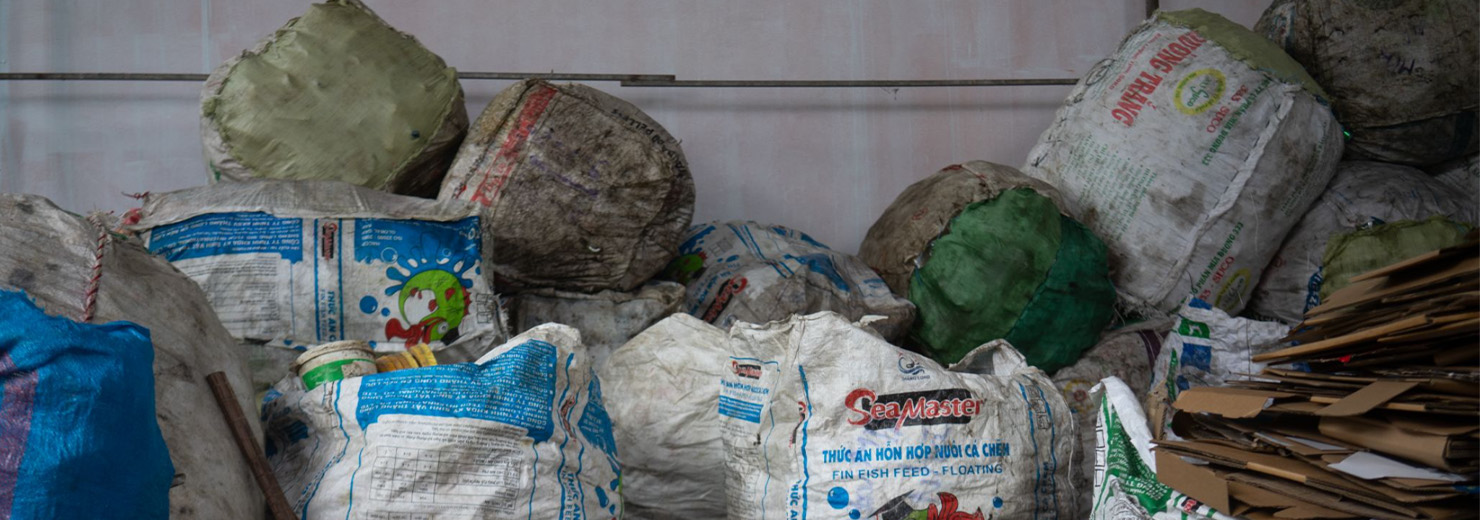
I usually carry a weighing scale with me, although some sellers prefer to use their own. I buy copper, iron, paper, plastic, and many other materials. When I return home, I sort everything into separate categories. I wait until I have accumulated enough before selling it to Son’s junk shop.
What knowledge and relationships have helped you in this work?
Because I buy and sell materials regularly, I have gradually learned the market prices. I usually sell to the same junk shop, so I can ask them about the latest prices. Other collectors also share information. We tell one another what different materials are selling for and which prices are increasing or decreasing.
At lunchtime, collectors in the area often meet and ask how much everyone has managed to buy that day. Most people already have their own routes and regular customers, so we do not take customers away from one another. We still talk, exchange information, and help each other understand the market.
Building relationships with households is also important. I try to be enthusiastic and friendly when I buy materials. Some households keep their recyclables for me when they have not seen me for a while.
Once, I bought a container that had been used to store a mosquito net. Later that day, the seller came to my house and asked whether there had been a necklace inside. When I shook the container, I found gold jewelry. I returned everything to the owner.
People know me and trust me. That matters in this work.
What challenges do you face?
Prices fluctuate a lot. Sometimes, I expect the price to rise, but it suddenly falls. Near the Lunar New Year, prices tend to be more stable, but at other times it is difficult to know what will happen.
There is also a lot of competition. Sometimes, I have to offer a slightly higher price before someone agrees to sell to me. There have been times when I made no profit. I have also bought the wrong materials or received less than I expected. If the junk shop refuses to accept something, I have to take it home and discard it. Then I lose money.
The weather also affects my income. I usually buy more materials during the dry season. When it rains, fewer people call because the materials become dirty or wet.
I always carry a raincoat, but when the materials are getting wet, I sometimes use it to cover them instead of myself. Paper is especially difficult. If it gets wet, I have to take it home and dry it before I can sell it.
I often say, “Please do not let it rain. Rich people may enjoy the rain, but poor people suffer when it rains.”
The hardest periods are when there are few materials available. During the COVID-19 pandemic, there were fewer materials and my income was badly affected. This year, the amount I collect has continued to decline and business has been slower.
All I can do is keep trying to manage. Even when things are difficult, I have to continue working.
What health and safety risks do you encounter?
I have been cut and scratched by iron and other sharp materials. When that happens, I get a tetanus injection.
I also once lost control of my vehicle and fell, although fortunately I was only slightly injured. I have never experienced a very serious accident. I have a health insurance card, but I rarely visit the hospital unless I am sick or injured. I do not go for regular health check-ups because I worry that taking time away from work will cause me to lose customers.
If someone has materials to sell and I am unavailable, they may call another collector instead.
What support has changed the way you work?
I attended a training session where I learned how to protect myself while collecting and handling recyclable materials. I also received a shirt, gloves, and other protective equipment from Duy Tan Recycling.3
We were advised to wear gloves when handling iron, sheet metal, and other sharp objects. Since the training, I have been more careful while working.4
How has this work shaped your family’s life?
When my son was about two years old, I could not afford to send him to kindergarten. I placed him in a large seat attached to the back of my bicycle and took him with me while I collected recyclables. When I had collected too many materials to carry him safely, I sometimes left him with a household I knew, sold what I had collected, and then returned to pick him up.
Today, I sometimes take my grandchildren with me because there is no one at home to look after them. People ask why I bring them into the heat, but I cannot leave them by themselves. They already recognize and sort some recyclable materials, although mostly they play with them.
Part of me would like my children and grandchildren to continue this work, but I also think it would be better for them to work for a company where they could have insurance and more stable employment.
Recyclable materials collectors do not have insurance through this work, so how could I encourage my children to follow the same path?
In the past, I worked for my children. Now, I work for my grandchildren.
What support would make the greatest difference to your future?
Access to a suitable, low-interest loan would be the most useful support.
If I could borrow several tens of millions of Vietnamese dong (approximately US$ 1,000 to 2,000), I would have enough capital to continue buying and selling recyclable materials. When prices fall, having capital would allow me to keep buying materials and wait until the market becomes more stable before selling them.
Most larger loans require a house or another asset as collateral. I do not have anything I can use, so it is very difficult to borrow. Loans that do not require collateral often have interest rates that are too high. My cart and vehicle also break down regularly. Each repair can cost several million dong (around US$ 100 or more) – the equivalent of many days of work.
Access to affordable finance would help me continue buying materials during difficult periods and repair the equipment I rely on.5
Built over two decades
For more than 20 years, Nhạn has built the knowledge and relationships needed to navigate Mỹ Tho City’s recycling economy. She understands how material prices fluctuate, which buyers will accept different recyclables, and how to protect the materials she collects. Above all, she has earned the trust of households who continue to set recyclables aside for her.
The Responsible Sourcing Initiative project in Viet Nam works with Duy Tan Recycling to strengthen responsible sourcing practices and improve occupational health, safety, and livelihoods among informal waste sector workers in its recycling value chain. Through the project, waste pickers have received training, personal protective equipment, health insurance support, and information about financial services.
Endnote
1 Vietnam News. (2024). Detailed guidance on EPR to be issued this month [online]. Available at: https://vietnamnews.vn/economy/1653312/detailed-guidance-on-epr-to-be-issued-this-month.html [accessed July 15, 2024].
2 Global Plastic Action Partnership. (2023). Gender context assessment of the plastic value chain in Viet Nam[online]. Available at: https://weforum.ent.box.com/s/8y10a2qcpko0qnoc8lprgff52yg8gw11 [accessed July 15, 2024].
3 Duy Tan Recycling (DTR) is one of the first bottle-to-bottle recycling facilities in Viet Nam. The Responsible Sourcing Initiative implementation project for DTR was launched in 2024, with HP Inc. as the brand partner and Green Hub as the civil society organization representing informal waste sector workers. Through this partnership, DTR commits to implementing the Harmonized Responsible Sourcing Framework for Recycled Materials across its selected value chain, with a focus on improving the lives of informal waste sector workers.
4 Through the Responsible Sourcing Initiative project in Viet Nam, Nhạn participated in training on occupational health and safety, workers’ basic rights, and access to financial services. She also received personal protective equipment and a tetanus vaccination.
5 With support from project partner VECA, Nhạn is exploring access to microfinance through Capital Aid for Employment of the Poor (CEP), a Vietnamese microfinance institution.